Wipes Wrapped in a Toilet Line
Wipes stay in one piece long after they leave the bowl and snag at the first joint. A retrieval head hooks the wad and pulls it back out instead of shoving it toward the main.
Now showing . Phone number, services and service areas are updated to your local crew. Phone, services & service area updated
Find your local crew
Pick a branch and we’ll show the right phone number, services and service area across the whole site. You can change it anytime from the top bar.
Phone, services and service area update to match.
OUR SERVICES
Drain auger and cable machine service for West Des Moines sinks, tubs, toilets, floor drains and main lines. Hair, wipes and lodged objects pulled out, not pushed deeper.
OVERVIEW
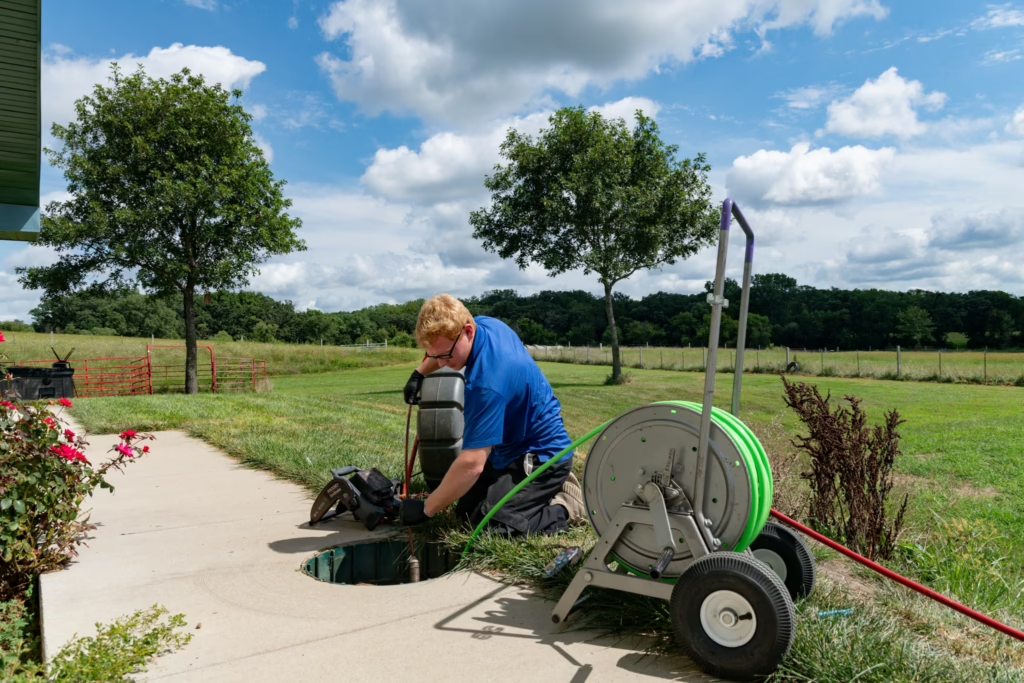
A drain auger, also called a cable machine or drain snake, is a rotating steel cable fed into a pipe to bore through, hook or cut whatever is stopping the flow. We at Clog Busters run augers on fixture drains, branch lines and main lines for West Des Moines homes and businesses from our Des Moines branch on Vandalia Road, 24 hours a day.
Most of what a cable drags out of a West Des Moines drain is material the city already bans from its sewers. Section 7-8B-2 of the West Des Moines City Code prohibits solids big enough to obstruct flow, naming rags, plastics, hair, and paper cups and dishes, whether whole or run through a garbage grinder. The Des Moines Metropolitan Wastewater Reclamation Authority puts baby wipes on its do-not-flush list too, even the ones labeled flushable.
A cable is built for exactly that kind of stoppage. When a coated wall or a damaged pipe is the real problem, footage from a drain camera inspection points to hydro jetting in West Des Moines or a repair instead. See our drain auger service.
Drain auger work is done to the 2024 Uniform Plumbing Code, the plumbing code Iowa has enforced since March 26, 2025.
WHEN A CABLE FITS
An auger does its best work on something you could hold in your hand.
Wipes stay in one piece long after they leave the bowl and snag at the first joint. A retrieval head hooks the wad and pulls it back out instead of shoving it toward the main.
Hair sits on the regional do-not-flush list for a reason: it ropes together with soap into a plug. A small drum auger winds it onto the cable tip and draws it out whole.
Thicker than toilet paper and slow to fall apart, they stack up in a closet bend. The cable breaks the pile loose so ordinary flow can carry it away.
A toothbrush, a bottle cap or a small toy needs to come out, not travel deeper. A closet auger or a grabbing head brings it back up through the fixture.
Where the camera shows roots entering a line that is still round and intact, a cutting blade shears them back to the pipe wall and flow returns.
A single sluggish fixture means a branch clog, not a main line problem. A light cable through the trap arm clears it without touching the main.
AUGER SERVICES
Cable size and head change with the pipe, from a vanity sink to the building sewer.
A thin hand cable through the trap or the overflow pulls out hair and toothpaste sludge without scratching the basin.
A drum machine with a small cable works past the drain body and into the branch, where hair mats tend to settle.
A closet auger has a guarded tube that protects the porcelain while the cable clears the trapway.
A mid size cable reaches through the floor drain trap toward the building drain. If the camera shows lint coating the pipe, jetting finishes the job.
West Des Moines code treats disposal waste as properly shredded only when no particle is larger than half an inch. Coarser scraps settle in the kitchen branch, and a cable reopens it.
A heavy sectional or drum machine, fed through an outdoor or basement cleanout, clears wipes and roots from the main line out toward the city sewer.
WHY CLOG BUSTERS
Find the access, match the cable, clear the line, then prove the flow.
We choose the shortest path to the blockage: the fixture itself, a trap arm, a pulled toilet, or a cleanout on the main.
Cable diameter follows pipe size, and the head follows what we expect to find: hooks for wipes, blades for roots, a bulb for hair.
The cable feeds in slowly while it turns, and we make several passes through the stoppage instead of punching one small hole down its middle.
Wipes, hair, roots or flakes of pipe each point to a different cause and a different fix.
We run water at volume to confirm the line carries a full load. A main line, a repeat clog or root debris gets a camera pass before we recommend anything more.
FAQ
Still stuck? Call the Des Moines shop at (515) 259-1991.
A drain auger clears solid blockages: hair, wipes, paper towels, lodged objects, food scraps and roots growing into a sound pipe. Those overlap closely with the items West Des Moines City Code section 7-8B-2 bans from the public sewer because they obstruct flow. A cable hooks them or breaks them apart so the line runs again.
No. The Des Moines Metropolitan Wastewater Reclamation Authority asks residents to throw every wipe in the trash, including ones labeled flushable, because they do not break down easily in the sewer. Inside a house line they catch on joints and build into a plug that only a cable will retrieve.
Only if they are ground fine. West Des Moines City Code defines properly shredded garbage as food waste ground so that no particle is larger than half an inch, small enough to move freely in a sewer. Peels, rice and coffee grounds that settle in the kitchen branch line are a common reason we bring an auger to a sink.
Most homes have at least one cleanout, a threaded cap on a Y or T fitting that opens the drain to a cable. Look along the basement wall where the soil stack meets the floor, or for a capped riser in the yard. It matters because a cable fed through a cleanout reaches the main without passing through a toilet or a trap. The Uniform Plumbing Code in force in Iowa requires cleanouts to stay accessible, so never wall one in or bury it under storage.
Clogs that live on the pipe wall, or in a damaged pipe, should not be cabled. Grease and scale coat the inside of a line, and a cable only cuts a narrow channel that closes again within weeks. A cracked, sagging or separated pipe can snag the cable head, and cabling it over and over does nothing about the damage. In those cases a camera pass decides whether jetting or a repair comes next.
Not when the cable fits the pipe and the operator can feel the line. Damage usually comes from a cable too heavy for a small drain, a blade forced against pipe that has already cracked, or a cable spun while it is kinked. We size the cable to the drain and slow down at bends and at joints where old pipe meets newer material.
Roots return because a cutting blade trims them but leaves open the gap they grew through. A root enters a sewer line at a leaking joint or crack, where it finds water, and regrows from the part still outside the pipe. Cabling restores flow for a while, yet the joint stays open. A camera pass shows whether a spot repair, or a trenchless fix where the pipe allows, would end the cycle.
Yes. Our Des Moines branch at 3950 Vandalia Road is open 24 hours a day, 7 days a week. A toilet that will not flush or a main line backing into a floor drain gets priority over routine work. Stop running water until we arrive, since every flush adds to the backup.
Local coverage