Hair Mats in Tub and Shower Lines
Hair binds with soap into a rope that catches at the trap arm. A drum machine with a grabbing head pulls it out instead of shoving it deeper.
Now showing . Phone number, services and service areas are updated to your local crew. Phone, services & service area updated
Find your local crew
Pick a branch and we’ll show the right phone number, services and service area across the whole site. You can change it anytime from the top bar.
Phone, services and service area update to match.
OUR SERVICES
Cable machine clearing for Clive sinks, tubs, toilets, floor drains and main lines, with the cable and head matched to each pipe.
OVERVIEW
A drain auger, also called a cable machine or drain snake, is a rotating steel cable fed into a pipe to bore through, break up or pull back whatever is blocking it. It suits hair, wipes, paper, soft blockages, roots in a sound pipe and dropped objects. We at Clog Busters run cable machines across Clive from our Des Moines branch on Vandalia Road, open 24 hours a day, 7 days a week.
Clive’s sewer use rules read like a list of what comes back on our cable heads. Clive Code Section 8-3-10 bars solid or viscous material that obstructs flow in the public sewer system, and it names wipes, rags, hair, wastepaper, plastics and grease among the examples. The code makes no exception for wipes labeled flushable.
Census Bureau survey estimates for 2020 to 2024 count about 2,500 of Clive’s 7,363 housing units as built in 2000 or later, roughly one in three. Plastic drain lines of that age rarely rust or scale shut, so a clog in one is usually something that went down a drain.
When the camera shows grease or scale lining the pipe, our Clive hydro jetting page covers the next step. See also our drain auger service overview, Clive drain camera inspections and the Clive location page.
Cable work in Clive follows the 2024 Uniform Plumbing Code, in force in Iowa since March 26, 2025, and the sewer discharge prohibitions in Clive Code Title 8, Chapter 3.
WHEN A CABLE FITS
A cable wins against anything it can cut, hook or break apart. The camera tells us when it is the wrong tool.
Hair binds with soap into a rope that catches at the trap arm. A drum machine with a grabbing head pulls it out instead of shoving it deeper.
Wipes hold together in water. They wad up at a joint or a low spot, and a cutting head shreds the wad so the line can carry it off.
One heavy flush can pack the trapway solid. A closet auger reaches through the bowl with a guarded bend that keeps the cable off the porcelain.
A toothbrush, a toy or a bottle cap. A retrieval head hooks it and brings it back, where water would push it farther along.
Where the camera shows roots entering a joint that has not cracked or shifted, a cutting blade shears them back to the pipe wall and restores flow.
A cable bores a hole through grease and scale and leaves the coating behind. In a cracked or collapsed section it can snag and widen the damage. Those lines need jetting or repair.
AUGER SERVICES
A cable too light for the line whips past the blockage. One too heavy will not turn through a fixture trap.
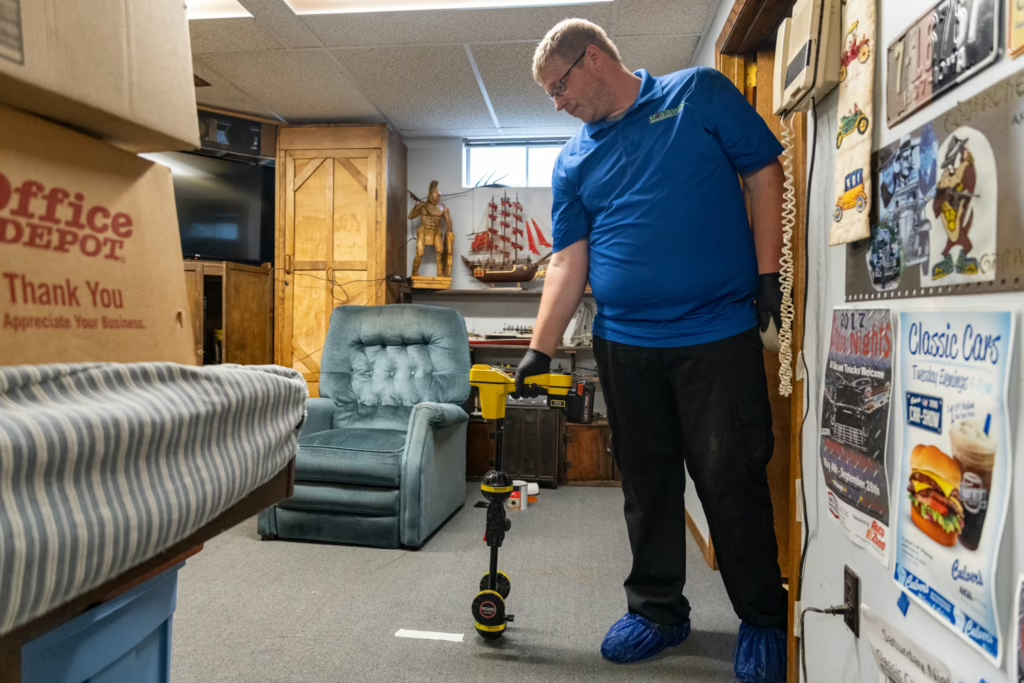
A hand or drum auger through the trap or the wall fitting, with a thin cable that bends through tight fittings without kinking.
A flexible cable through the overflow or drain opening, with a head that grabs hair instead of cutting it into strands.
A closet auger clears the trapway. If the blockage sits past the toilet, we pull the fixture and run a cable from the flange.
A floor drain trap often packs with silt above its branch line. A mid-size cable reaches through both.
Lint and fiber collect where the washer discharges. We cable from the standpipe to the stack, then run the washer to see it drain.
A heavy sectional or drum machine works from the main cleanout toward the street, with a cutting head for wipes or roots along the building sewer.
WHY CLOG BUSTERS
Find the access, size the cable, clear it fully, then prove it.
We start at the opening closest to the blockage: a cleanout plug, a trap, a toilet flange or a roof vent. Closer access means less strain on old fittings.
Line size sets the cable. The blockage sets the head: a grabber for hair, a retrieval tool for objects, a cutting blade for wipes and roots.
We pass through the blockage more than once and draw the cable back slowly, so debris comes out instead of re-forming downstream.
After a main line is cabled, a camera run shows whether the pipe is open wall to wall and whether roots, a sag or a coating will bring the clog back.
We fill and drain a tub or run the washer to confirm the line takes real volume, then wipe down the cable and leave the area clean.
FAQ
Still stuck? Call the Des Moines shop at (515) 259-1991.
A drain auger clears blockages it can cut, hook or break apart: hair, wipes, paper, soft food clogs, small objects and roots growing into a sound joint. It does not remove grease, mineral scale or sludge coating a pipe wall, because the cable slides through and leaves the coating in place. Those deposits call for jetting.
No. Clive Code Section 8-3-10 prohibits solid material that obstructs flow in the public sewer system and lists wipes and rags by name, with no exception for products labeled flushable. Wipes hold together in water, so they snag at joints and roots inside your own drain before they ever reach the City main. Put them in the trash, along with paper towels and hygiene products.
Repeat toilet clogs usually come from too much paper at once, from wipes, or from an object lodged in the trapway that lets water pass but catches paper. A closet auger clears the trapway and can often retrieve the object. If the clog sits past the toilet, the trouble is in the branch or main line, and a heavier cable or a camera look comes next.
It can when the cable is the wrong size or is forced. An oversized cable can gouge a fixture trap, and a cable driven hard into a cracked or offset section can catch and pull the damage wider. We size the cable to the line, start at the closest access, and camera the main when the cable meets resistance it should not.
For a sink or tub trap, a hand auger from a hardware store is reasonable. Main lines are different: rental machines are heavy, the cable can wrap around a hand, and a cable lodged in a lateral turns a clog into a retrieval. If a hand auger does not clear the drain within the first few feet, call us.
Yes, newer plastic drain lines clog too, for different reasons. Census Bureau estimates for 2020 to 2024 count about 2,500 Clive housing units built in 2000 or later. Plastic pipe that young rarely rusts or scales shut, so its clogs usually come from wipes, hair, paper and food, which a cable handles well.
A cleanout makes it far easier, but it is not the only way in. A main line cleanout is a capped opening on the drain, usually in the basement floor or near the foundation, that gives a cable a straight path toward the street. Without one, we can work through a pulled toilet or a roof vent. A house with no usable cleanout may be worth fitting with one at the next repair.
Keep the materials that cause clogs out of the drain. Clive Code Section 8-3-10 lists grease, hair, rags, wipes, wastepaper and plastics among the materials barred from the sewer, and each one turns up on our cable heads. Use a hair catcher in tubs and showers, scrape grease into the trash, and flush only toilet paper. A line that clogs again within months should be cameraed for roots or a sag.
Local coverage