The Lower Level Shower Fills on a Flush
Water rising in a basement shower or floor drain when someone flushes upstairs means the shared line downstream is restricted. That is a main line call, not a plunger job.
Now showing . Phone number, services and service areas are updated to your local crew. Phone, services & service area updated
Find your local crew
Pick a branch and we’ll show the right phone number, services and service area across the whole site. You can change it anytime from the top bar.
Phone, services and service area update to match.
OUR SERVICES
Kitchen, bathroom, laundry, floor drain and main line cleaning for Clive homes, with the method picked after we see what is in the pipe. Our Des Moines branch covers Clive around the clock.
OVERVIEW
Drain cleaning removes whatever is blocking or narrowing a drain line, from a hair mat in a tub trap to roots in the main. Most Clive calls come down to two questions: which drain stopped, and whether the trouble sits in one fixture or in the line they all share. We at Clog Busters answer both for Clive households, day or night, from our Des Moines branch.
The kitchen is where Clive’s own public works staff aim their warnings. A fats, oil and grease poster from the City of Clive and the Des Moines Metro Wastewater Reclamation Authority tells cooks to wipe pots and pans before washing, put food waste in the trash instead of the disposal, and save waste oil for recycling rather than pouring it down the sink. Grease cools and sticks in your own kitchen branch long before it reaches a public sewer.
Clive Public Works reports that the city’s sanitary sewer system covers nearly 8 square miles and serves an estimated 18,000 residents. Every one of those homes drains through its own private piping before the water reaches a City pipe, and that private piping is where our crews spend their day. See our drain cleaning service overview and the Clog Busters Clive page. Cable work has its own page on drain auger service in Clive, and trouble past the foundation wall is covered under Clive sewer services.
Clive drain cleaning is carried out under the 2024 Uniform Plumbing Code, which took effect across Iowa on March 26, 2025.
ONE DRAIN OR THE MAIN
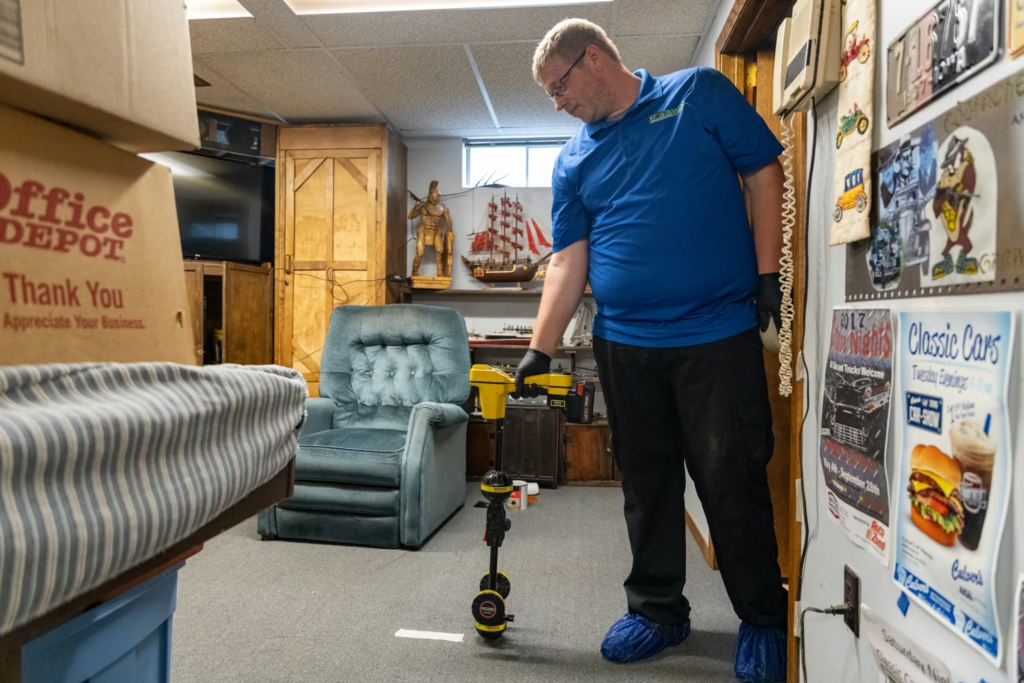
A clog in one fixture stays in that fixture. A clog in the main shows up in several places at once, and usually lowest in the house first.
Water rising in a basement shower or floor drain when someone flushes upstairs means the shared line downstream is restricted. That is a main line call, not a plunger job.
A tub that gurgles while the bathroom sink drains is pushing air past a partial blockage in the branch the two share.
If every other drain runs fine, the clog is local, usually grease and food packed into the kitchen branch between the sink and the stack.
A washer empties fast. Overflow at the standpipe alone points to lint in the laundry line; water at the floor drain during the same cycle points to the main.
When the kitchen, the bathrooms and the laundry all lose speed together, the one pipe they share is the likely culprit: the main.
A drain that stops again within weeks has a cause behind it, such as roots at a joint, a sag that holds debris, or buildup the last cleaning left in place.
DRAIN CLEANING SERVICES
Each drain in a house collects its own kind of debris, and that debris decides how we clear it.
Warm grease runs fine until it cools in the pipe and catches rice, peels and coffee grounds. Light buildup takes a cable; a coated line takes jetting.
Hair wraps around soap residue and forms a rope at the trap. We pull it back out of the line rather than shoving it toward the main.
Too much paper at once or wipes that never break apart. We clear the trapway, and if the stoppage is past the bowl, we go in from the flange or a cleanout.
Lint, fibers and detergent film settle where the washer discharges. Cleared early, the water stays in the standpipe and off the floor.
Floor drains collect sand and debris from mopping and storms, and a trap that never sees water dries out and lets sewer gas in.
Whatever the branches send, plus roots at older joints, ends up in the main. We clear it from a cleanout and put a camera through it afterward.
WHY CLOG BUSTERS
Find out which line stopped, clear it with the right tool, and show you what we found.
We ask which drains are slow and when it started, then run nearby fixtures to learn whether one drain or the shared line is blocked.
A fixture trap for a single sink, a pulled toilet or a basement cleanout for the main. The closer the access, the less strain on old fittings.
A cable handles hair, wipes, paper, roots and dropped objects. A jetter strips grease and scale from pipe that is still sound.
When the main line or a repeat clog is involved, a camera run records the pipe so roots, sags and breaks are found now instead of on the next backup.
We run fixtures at full flow to prove the line drains, show you what came out, and leave the work area clean.
FAQ
Still stuck? Call the Des Moines shop at (515) 259-1991.
Count the fixtures. One slow sink or tub is almost always a clog in that fixture's trap or branch. Several slow drains at once, gurgling between fixtures, or water rising in a lower level shower or floor drain point to the main line. A quick test: run the kitchen faucet for a minute and watch the basement floor drain.
The City of Clive and the Des Moines Metro Wastewater Reclamation Authority ask residents and businesses to keep fats, oil and grease out of drains. Their poster says to wipe pots, pans and work areas before washing, never pour cooking residue or waste oil into the drain, and collect waste oil for recycling. At home, that means letting bacon fat and fryer oil cool in a can, not rinsing them away with hot water.
Not for most of them. The City of Clive and WRA grease poster says to put food waste directly in the trash and not down the garbage disposal. Ground peels, rice and coffee grounds mix with grease in the pipe and settle into a paste that narrows the kitchen line.
The clog decides. A cable is the answer for solid stoppages like hair, wipes, paper, roots and dropped objects. Jetting fits pipe lined with grease or scale, as long as the pipe is sound. The camera comes in for main lines and repeat clogs, so we can see whether roots, a sag or damage will bring the problem back.
Most of it happens at the sink and the tub. Wipe greasy pans with a paper towel and toss it, scrape plates before rinsing, set a strainer over each shower drain, and flush only toilet paper. Pour a bucket of water into a basement floor drain every few months so its trap stays full.
The trap has most likely dried out. A floor drain holds water in its trap to block sewer gas, and in a Clive basement that rarely takes water, that seal evaporates. Pour a gallon of water down the drain and see whether the smell fades within a day. If it does not, a cracked line or a vent problem needs a closer look.
The price depends on which drain is blocked, how we reach it, and whether it takes a cable, a jetter or a camera run. We give you the price before any work begins. If the camera turns up a repair, that is quoted separately, and you decide whether to go ahead.
Yes. Clive calls go to our Des Moines branch, which runs around the clock every day of the year, holidays included. A backup at 2 in the morning gets a crew, not an answering service. Tell us which fixtures are backing up when you call, so we bring the right equipment.
Local coverage