A Restaurant Line That Slows Every Summer
Lake kitchens cook their heaviest volume in summer. Grease that gets past the interceptor coats the pipe, and a cable only punches a hole through it.
Now showing . Phone number, services and service areas are updated to your local crew. Phone, services & service area updated
Find your local crew
Pick a branch and we’ll show the right phone number, services and service area across the whole site. You can change it anytime from the top bar.
Phone, services and service area update to match.
OUR SERVICES
Hydro jetting for restaurant grease lines, marina kitchens, root-choked laterals, and pipes that run to a septic tank or grinder basin. Dispatched from our Kaiser shop on Hwy D, 24 hours a day.
OVERVIEW
Hydro jetting is a drain cleaning method that drives water through a nozzle at high pressure to strip grease, sludge, and root debris off the inside wall of a pipe. At the lake, the line often ends at a septic tank, a grinder pump basin, or a grease interceptor, and what sits at the far end decides how we jet it, or whether we should.
Grease is the most common reason a lake business calls for jetting. Camden County counted 4,355 tourism jobs in fiscal 2025, according to the Missouri Division of Tourism, and many of them are in kitchens. Osage Beach Ordinance 20.33, from 2020, requires every restaurant, bar, and kitchen that serves the public to run a grease interceptor and pump it before fats, oils, grease, and solids reach 25 percent of its liquid depth.
We at Clog Busters run our Lake of the Ozarks branch from 372 Hwy D in Kaiser and serve residential, commercial, and municipal clients across Camden, Miller, and Morgan counties, including Lake Ozark, Osage Beach, Camdenton, Eldon, Laurie, Linn Creek, Sunrise Beach, and Village of Four Seasons. For our other work at the lake, see drain and sewer service in Lake Ozark and drain and sewer service in Kaiser.
Plumbing, sewer, and septic rules at the lake are set by each city, county, and sewer provider, so we work to the requirements that apply where your property sits.
WHEN JETTING IS THE RIGHT CALL
Most jetting calls at the lake trace back to kitchen grease, tree roots, or a line that sat unused all winter.
Lake kitchens cook their heaviest volume in summer. Grease that gets past the interceptor coats the pipe, and a cable only punches a hole through it.
A dockside kitchen makes the same fats and oils as a dining room on the Bagnell Dam Strip. Osage Beach holds any facility that prepares food for the public to the same interceptor rule.
Grease left in a line over the off season cools and sets. Osage Beach's sewer code treats it as a substance that turns solid or viscous between 32 and 150 degrees Fahrenheit.
Sewer and septic lines carry steady water and nutrients, and roots find them. Cutting the roots is half the job. Flushing the cuttings out is the other half.
Grease in the pipe between house and tank is a fair reason to jet. We check the tank level first, because a full tank plus jetting water can push solids toward the drain field.
The gravity pipe from the house to a grinder station jets clean from the house cleanout. The basin and the pressure line beyond it are a different system.
HYDRO JETTING SERVICES
Residential, commercial, and municipal lines across Camden, Miller, and Morgan counties.
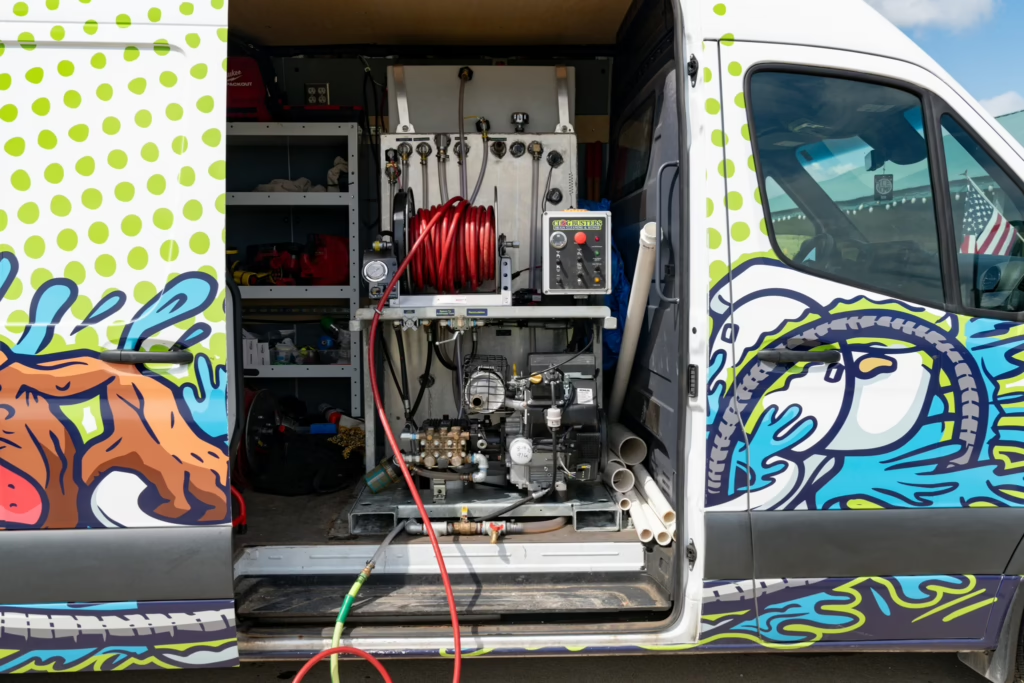
Kitchen to interceptor and interceptor onward, worked after close so diners never see us.
Dockside grills and resort kitchens, jetted on a seasonal schedule instead of after a holiday weekend backup.
Short-term guests rarely know what a septic tank or grinder pump can handle. We jet the shared stacks and laterals that collect the result.
The pipe between the house and the tank, jetted once we know the tank level, so the cleaning water does not overload the system.
A root cutting nozzle shears intrusion at the joint, then the jet carries the cuttings out of the line.
Scheduled jetting for businesses, associations, and public clients on lines that serve more than one building.
WHY CLOG BUSTERS
Find where it ends, look inside, then match the jet to the pipe.
Before a hose comes off the truck, we confirm whether the line ends at a septic tank, grinder basin, interceptor, or gravity main.
The camera shows whether the pipe is sound enough to take pressure and what is lining it: grease, scale, sludge, or roots.
A septic tank that is due gets pumped first. On grinder systems we jet only the gravity section to the basin. On commercial lines we plan around the interceptor so loosened grease is caught, not sent to the sewer.
Nozzle and pressure are set for the pipe material and condition, and we work end to end so the deposit is removed, not just opened.
A second camera pass shows the cleaned pipe, and a full volume flow test confirms the line carries a real load before we pack up.
FAQ
Still stuck? Call the Lake Ozark shop at (573) 222-0458.
Yes, the pipe between the house and the septic tank can usually be jetted safely. The Missouri Department of Health and Senior Services explains that grease floats into a tank's scum layer, and that an overfull tank lets solids flow out and clog the soil treatment trenches. That is why we check the tank before jetting and pump it first if it is due.
Only the gravity pipe that runs from the house to the grinder basin, which jets like any other lateral. Osage Beach alone has over 1,125 grinder stations, according to the city's sewer design guidelines, and those guidelines call for a backflow valve where the lateral meets the basin. We do not push a jetter through that valve into the basin or the pressure line. If the trouble is on the pump side, we tell you who maintains that station.
On a schedule set by volume and season rather than by the next backup. Osage Beach requires food businesses to pump their grease interceptors before fats, oils, grease, and solids reach 25 percent of the interceptor's liquid depth, and a busy summer gets there faster. We set the jetting interval from what the camera shows after the first cleaning.
A few weeks before opening day is the right window, not the morning of. Grease that sat in a cold line all off season hardens against the pipe wall, and the first full weekend of service is when it tends to fail. Jetting early leaves time to fix what the camera finds.
No. Jetting cuts the roots and flushes them out, but the joint or crack they came through stays open. Sewer and septic lines carry a constant supply of water and nutrients, which is what draws roots in from trees on a lake lot. The camera shows whether that opening needs a repair or a liner to keep them out.
Not when the pipe is sound and the pressure is matched to it. The risk is jetting a line that is already cracked, separated, or collapsing, which is why we run a camera before we jet. If the footage shows failed pipe, we stop and talk about a repair instead.
Both. Our Kaiser branch serves residential, commercial, and municipal clients across Camden, Miller, and Morgan counties. Restaurants, resorts, condo associations, and public lines get the same camera-first process as a single-family home.
Our Kaiser branch is open 24 hours a day, 7 days a week, and active backups go to the front of the schedule. Arrival time depends on where you are on the lake and what is already on the board. We give you a real estimate when you call.
Local coverage