Before You Close on a Home
A general home inspection rarely sends a camera down the sewer line. A recorded run from the cleanout toward the street fills that gap while the inspection window is still open.
Now showing . Phone number, services and service areas are updated to your local crew. Phone, services & service area updated
Find your local crew
Pick a branch and we’ll show the right phone number, services and service area across the whole site. You can change it anytime from the top bar.
Phone, services and service area update to match.
PLUMBING INSPECTIONS
Pre-purchase sewer camera inspections and whole-property plumbing checks for Pleasant Hill buyers, owners and landlords, covering drains, supply piping and the water heater, with recorded footage and a written summary.
OVERVIEW
A plumbing inspection in Pleasant Hill is a documented look at a property’s drains, sewer line, water supply piping, fixtures and water heater, done before a purchase, before a remodel, or after the same clog comes back. We at Clog Busters inspect Pleasant Hill homes, rentals and commercial buildings from our Des Moines branch on Vandalia Road.
The supply side deserves the same attention as the sewer. Chapter 90 of the Pleasant Hill Code of Ordinances defines the water service pipe as the line from the public main to the building and names Des Moines Water Works as the city’s water provider. If the owner’s portion of that pipe becomes defective and the owner does not correct it, the utility may make the repair and the city may assess the cost to the property. The same chapter reserves the curb stop for the utility and authorized city personnel, so the shutoff an owner can actually use is the main valve inside the house.
Our plumbing inspection service page covers the full scope, and our Pleasant Hill service page lists our other local work.
Inspection findings are measured against the 2024 Uniform Plumbing Code, in force statewide in Iowa since March 26, 2025.
WHEN TO SCHEDULE
The best time to inspect is before money changes hands or walls come open.
A general home inspection rarely sends a camera down the sewer line. A recorded run from the cleanout toward the street fills that gap while the inspection window is still open.
A second backup on one line means something in the pipe is catching waste. Footage shows whether it is a sag, an offset joint or buildup.
Moving a sink or adding a bathroom ties new piping into old. We check the drain, vent and supply lines the new layout depends on before the design is final.
Census Bureau estimates for 2019 to 2023 count 976 renter occupied homes in Pleasant Hill, roughly one in four occupied units. A baseline inspection between tenants records condition.
Pleasant Hill code allows a private septic system only where public sewer is not available. Iowa requires a DNR-certified time of transfer inspection before that property sells, separate from a plumbing inspection.
Pleasant Hill premises that are not single family homes report water use to Des Moines Water Works for backflow review. A new owner should know which devices are installed and when they were last tested.
WHAT WE INSPECT
Each inspection ends with a written summary, plus recorded footage of any line we film.
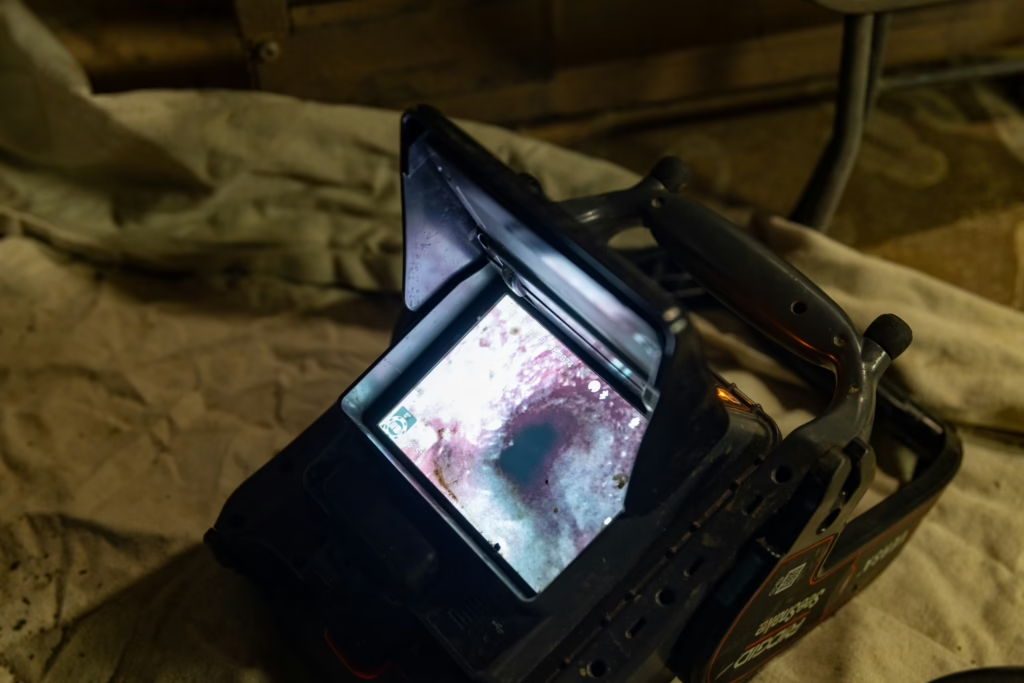
A camera travels the building sewer from an indoor cleanout toward the public main, recording pipe material, joints, roots and low spots, with the distance to each defect.
Every fixture run and drained, visible supply piping traced, the main shutoff tested, and the water heater, its relief valve and its visible venting examined.
We note the visible service pipe material where it enters the building and confirm the main valve closes, since city code puts the owner's portion of that pipe on the owner.
Instead of clearing a line one more time, we film it after cleaning to find the defect that keeps catching waste.
Drain sizes, vent locations and supply lines in the rooms being remodeled, documented before a contractor prices the job.
Unit by unit fixture, drain and water heater checks, plus a list of backflow assemblies and their tag dates in buildings that have them.
WHY CLOG BUSTERS
Start where the water enters, finish at the sewer, and put every finding in writing.
We locate where the water service enters the building, note the visible pipe material, and test that the main valve closes and reopens.
Each sink, tub, toilet and hose bib is run for flow and drainage, and we look under cabinets for drips, corrosion and worn supply lines.
We look at the tank for leaks and rust, the temperature and pressure relief valve and its discharge pipe, the visible venting, and any expansion tank.
The camera enters through a cleanout and records the line toward the public main, logging the distance to roots, cracks, sags or offset joints.
You receive the footage and a written summary sorted into what is sound, what to watch and what needs repair, with no obligation to hire us for any of it.
FAQ
Still stuck? Call the Des Moines shop at (515) 259-1991.
Usually not. A general home inspection is visual and typically stops at the floor drain or the cleanout cap. A sewer camera inspection is a separate service that records the inside of the line from the house toward the public main. It adds to a home inspection rather than replacing it, and it is not a city inspection.
The property owner is responsible for the owner's portion of the water service pipe, which Pleasant Hill code defines as the pipe from the water main to the building. Chapter 90 of the city code lets Des Moines Water Works repair a defective owner portion the owner fails to fix, with the city assessing the cost to the property. Only the utility or authorized city personnel may operate the curb stop. During an inspection we document the visible service pipe and confirm the indoor main shutoff works.
You receive the recorded camera footage of any line we filmed and a written summary of the findings. The summary separates items that are sound, items to watch and items that need repair, with the distance to each sewer defect. Both are yours to keep and share, with no obligation to hire us.
Yes, footage of a cracked, sagging or root-filled line gives a buyer specific evidence to bring to the seller. The recording shows the defect and where it sits along the line, which a verbal description cannot do. Buyers can use it to ask for a repair, a credit or a price change before closing.
Yes. The Iowa Department of Natural Resources requires every home or building served by a private septic system to have that system inspected before it is sold or the deed transfers, and only a DNR-certified inspector may do it. Pleasant Hill code allows a private system only where public sewer is not available and requires connection once sewer becomes available. Our plumbing inspection covers the house plumbing and drains, and the septic inspection is a separate requirement.
A commercial building with a containment backflow assembly needs that assembly tested every year. Pleasant Hill's cross connection ordinance has premises that are not single family residential return a water usage inventory to Des Moines Water Works, which decides what protection is required. Assemblies are tested at installation and at least annually by a registered technician, and the records go to the utility. Our commercial inspections list the assemblies on site and their tag dates.
Yes, a turnover inspection is the simplest way to document plumbing condition before a new lease starts. Census Bureau estimates for 2019 to 2023 place 976 of Pleasant Hill's 4,035 occupied homes in the renter occupied column. We run every fixture, check the water heater and film the main line. That record helps separate tenant damage from ordinary wear.
No. The summary reports what the camera and the fixture checks show, including systems that are in good shape. You decide whether to repair anything, and who does it. Any quote we give is priced from the recorded footage, so you can compare it with other estimates.
Local coverage